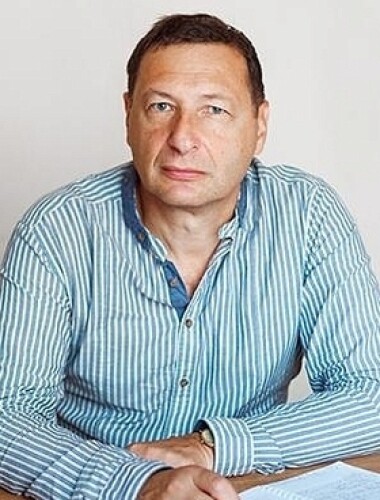
human rights defender
Boris Kagarlitsky
Actions and Campaigns
human rights defender
Actions and Campaigns
1958
Man
Urban
In prison (sentenced)
Boris Kagarlitsky lives in Moscow. He is a sociologist, publicist, video blogger, and editor-in-chief of the Rabkor online media. Member of the scientific community of the Transnational Institute (TNI, Amsterdam) since 2000. Lecturer at the Moscow Higher School of Social and Economic Sciences.
According to Kagarlitsky, his paternal family descends from Ilya Kagarlitsky, a successful Jewish businessman from the city of Kaharlyk in Ukraine. His mother comes from an Orthodox Christian family. He has a daughter, Ksenia.
In the USSR he was a dissident and published samizdat. In the 1970s, he studied theatre criticism at the State Institute of Theatrical Art, before being expelled for dissident activities in 1980.
In 1988 he published his book, Thinking Reed: Intellectuals and the Soviet State from 1917 to the Present, which won the Deutscher Memorial Prize.
In 1988, after the rise of Mikhail Gorbachev and the perestroika, he was permitted to resume his studies at the university, graduating in the same year.
From 1994 to 2002, he was a senior research fellow at the Institute for Comparative Political Studies of the Russian Academy of Sciences. He was awarded his Doctorate degree for his thesis, "Collective Actions and Labour Policies in Russia in the 90s," in 1995, and has taught political science at Moscow State University, the Moscow School for Social and Economic Sciences, and the Institute of Sociology of the Russian Academy of Sciences.
The accusation was based on publications about the undermining of the Crimean bridge. However, according to Memorial's conclusions, in the video Kagarlitsky discusses the motives and consequences of the actions of both Ukraine and, to a greater extent, the Russian Federation, without giving any assessment of the Crimean Bridge explosion itself. Nevertheless, it is known from many of Kagarlitsky's statements that he condemned a full-scale war. In the criminal case against Boris Kagarlitsky, searches were conducted not only at his home, but also at the homes of several employees of the Internet media Rabkor.
The criminal case against him, looking at the formal charges, appears groundless (there is no justification of terrorism in the materials imputed to Kagarlitsky), but in essence it is obvious that the purpose of the prosecution is to stop the socio-political activities of Kagarlitsky and his media Rabkor.
Feb 13, 2024
5 years
Latitude: 57.02806396822696
Longitude: 35.03566298239529
Torzhok
FKU IK-4 UFSIN of Russia for the Tver Region 79 Staritskaya Street Torzhok, Tver Region, 172011 Russia
Russia: Anti-terrorism legislation misused to punish activist Boris Kagarlitsky https://www.amnesty.org/en/latest/news/2024/02/russia-anti-terrorism-legislation-misused-to-punish-activist-boris-kagarlitsky/
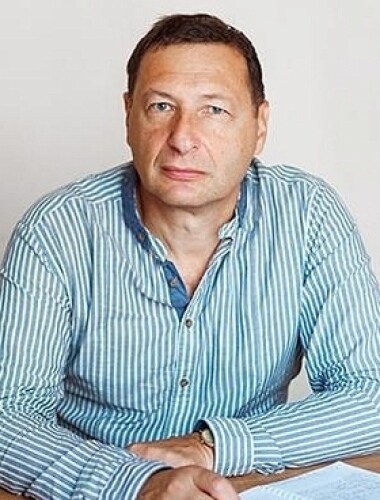
Boris Kagarlitsky lives in Moscow. He is a sociologist, publicist, video blogger, and editor-in-chief of the Rabkor online media. Member of the scientific community of the Transnational Institute (TNI, Amsterdam) since 2000. Lecturer at the Moscow Higher School of Social and Economic Sciences.
According to Kagarlitsky, his paternal family descends from Ilya Kagarlitsky, a successful Jewish businessman from the city of Kaharlyk in Ukraine. His mother comes from an Orthodox Christian family. He has a daughter, Ksenia.
In the USSR he was a dissident and published samizdat. In the 1970s, he studied theatre criticism at the State Institute of Theatrical Art, before being expelled for dissident activities in 1980.
In 1988 he published his book, Thinking Reed: Intellectuals and the Soviet State from 1917 to the Present, which won the Deutscher Memorial Prize.
In 1988, after the rise of Mikhail Gorbachev and the perestroika, he was permitted to resume his studies at the university, graduating in the same year.
From 1994 to 2002, he was a senior research fellow at the Institute for Comparative Political Studies of the Russian Academy of Sciences. He was awarded his Doctorate degree for his thesis, "Collective Actions and Labour Policies in Russia in the 90s," in 1995, and has taught political science at Moscow State University, the Moscow School for Social and Economic Sciences, and the Institute of Sociology of the Russian Academy of Sciences.
The accusation was based on publications about the undermining of the Crimean bridge. However, according to Memorial's conclusions, in the video Kagarlitsky discusses the motives and consequences of the actions of both Ukraine and, to a greater extent, the Russian Federation, without giving any assessment of the Crimean Bridge explosion itself. Nevertheless, it is known from many of Kagarlitsky's statements that he condemned a full-scale war. In the criminal case against Boris Kagarlitsky, searches were conducted not only at his home, but also at the homes of several employees of the Internet media Rabkor.
The criminal case against him, looking at the formal charges, appears groundless (there is no justification of terrorism in the materials imputed to Kagarlitsky), but in essence it is obvious that the purpose of the prosecution is to stop the socio-political activities of Kagarlitsky and his media Rabkor.
Latitude: 57.02806396822696
Longitude: 35.03566298239529
5 years
Russia: Anti-terrorism legislation misused to punish activist Boris Kagarlitsky https://www.amnesty.org/en/latest/news/2024/02/russia-anti-terrorism-legislation-misused-to-punish-activist-boris-kagarlitsky/
You're all caught up
New activity will show up here.