human rights defender
human rights defender
Man
In prison (sentenced)
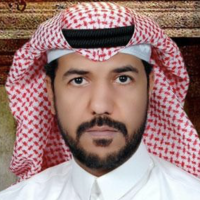
Khaled Al-Omair is a Saudi human rights defender and an advocate for constitutional reform.
Jun 29, 2018
9 years
Latitude: 24.44914
Longitude: 46.81299
Riyadh
Al-Ha’ir Prison
Al-Omair remained held without charge until he was brought to court and sentenced in April 2021. During that time, the authorities did not allow him to see his sick father and prevented him from attending his funeral after his death on 20 March 2019, as well as preventing him from visiting his sick mother in the hospital. In December 2019, after months of detention without charge, he managed to smuggle a tissue out of his cell on which he listed his demands. These included being released or brought to trial, challenging the legality of the Counter-Terrorism Law and the Specialised Criminal Court, and requesting interviews with representatives of human rights organizations. He has started a hunger strike to support these demands. On 11 February 2020, he announced that he was suspending his hunger strike after the Public Prosecutor’s Office informed him that State Security had transferred his case to them. On 30 July 2021, he was subjected to an attempted murder by another prisoner who disappeared after this attempt.
On 27 December 2008, Al-Omair announced his intention to protest against the blockade and Israeli aggression against Gaza in Palestine. He was arrested on the morning of the following day by security forces before he could start the demonstration. On 15 May 2011, he was sentenced by the Specialised Criminal Court in Riyadh to eight years in prison, with a travel ban for the same period after the completion of his sentence. The court found him guilty of inciting demonstrations and calling for them via the Internet. On 12 April 2017, Al-Omair was released after serving his sentence. On 03 November 2016, he was transferred from Al-Ha’ir prison in Riyadh to Mohammed bin Nayef Counseling and Care Centre in preparation for his release. On 06 October 2016, Al-Omair had started a hunger strike which lasted 29 days to protest the failure to release him despite serving the duration of his prison sentence of eight years, as of 05 October 2016. In 2018, Al-Omair filed a complaint with the Saudi Royal Court against one of the officers of the General Directorate of Investigation, who he alleges tortured him during his imprisonment. The torture involved handcuffing his hands and feet, putting him in solitary confinement for nine consecutive days in an empty cell with nothing to sleep on (not even a blanket), and forcing him to stand for long hours during some days. On 05 July 2018, Al-Omair went to the General Directorate of Investigation to follow up the complaint who asked him to leave pending investigation of his complaint. On the following day, a group of agents of the General Directorate of Investigation approached him and asked him to go with them to Al-Ha’ir Political Prison to meet with a special committee, which they said was formed to look into his complaint, but which apparently was formed to interrogate him only. On 25 April 2021, the Specialized Criminal Court in Riyadh sentenced human rights defender Khaled Al-Omair to seven years in prison after convicting him of charges that include “leading a campaign to draft a new constitution for the country” and “launching a hashtag for this campaign on social media networks.” It uses hashtag: #The_people_want_a_new_constitution. On 16 August 2021, the Court of Appeal decided to add two years to Al-Omair’s previous sentence of seven years in prison, bringing the sentence against him to nine years in prison, and a travel ban for a similar period after completing his sentence.
Documented by