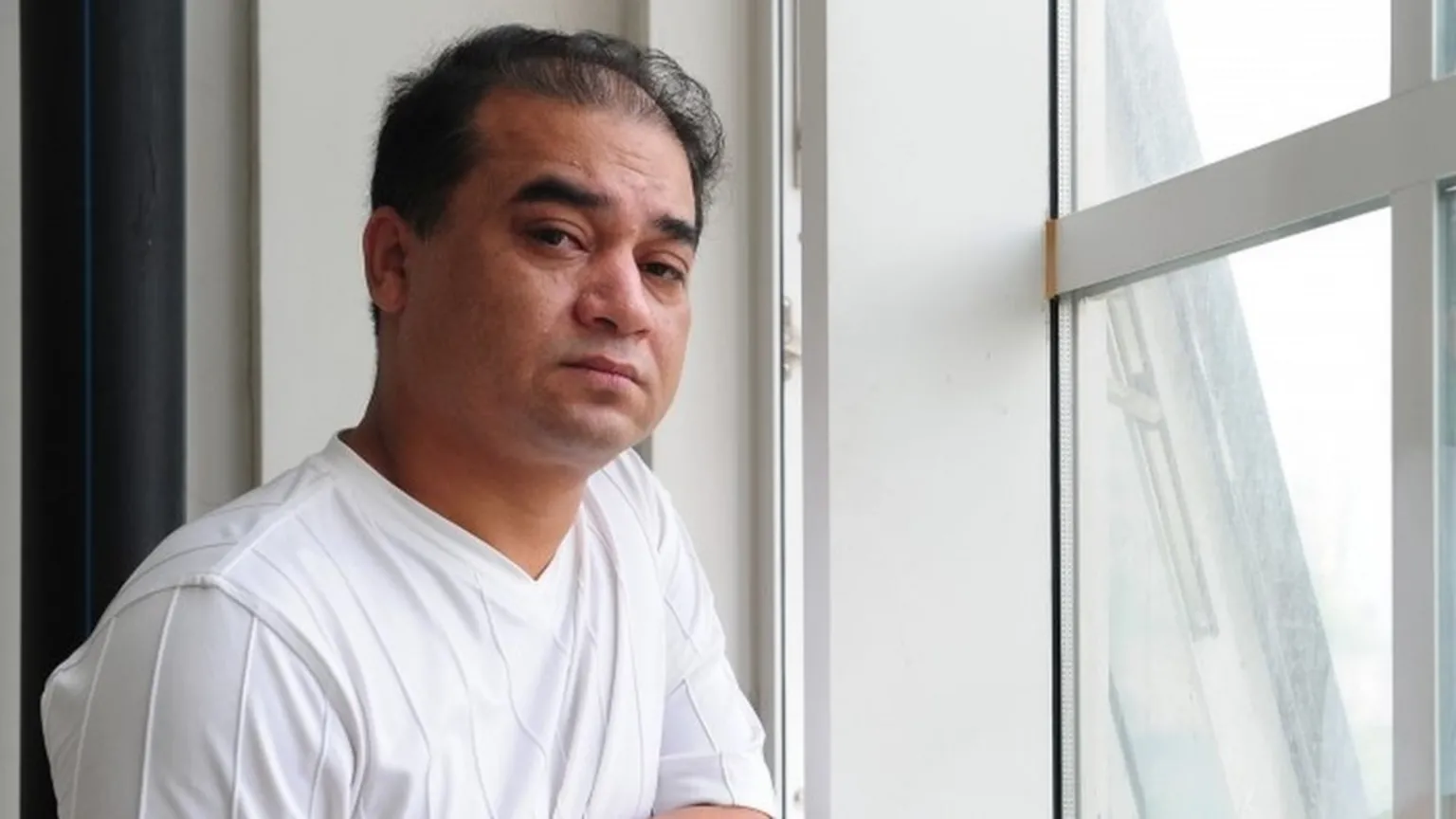
human rights defender
Tohti Ilham
© British Broadcasting Corporation (BBC)
Legal assistance
1969
Man
Rural
Ilham Tohti was born in Artush, Xinjiang Uyghur Autonomous Region, China, on October 25, 1969. He is a Uyghur economist currently serving a life sentence in China on separatism-related charges. He graduated from Northeast Normal University and the School of Economics at what was then known as the Central Nationalities University, now Minzu University of China (MUC), in Beijing, where he studied economics and later taught the subject.
After graduating, Tohti briefly worked in the Southern Xinjiang People’s Liberation Army (PLA) military zone before transitioning to civilian life. He comes from a family with significant ties to public service.
Tohti traveled extensively throughout Central Asia, Russia, and South Asia, where he witnessed ethnic conflicts, political unrest, and social instability. These experiences strengthened his commitment to studying issues affecting Xinjiang and Central Asia, with the aim of helping to prevent similar outcomes in China.
Chinese authorities accused him of using his lectures to incite violence, undermine the government of the People’s Republic of China, and engage in separatist activities. According to the limited public information available about the trial, prosecutors alleged that Tohti repeatedly stated during his lectures at MUC that people should “not think that violent protests are terrorist activities.” State media further claimed that he used the “April 23” case to advocate violence and made remarks such as, “Using violence fights against violence; I admire them as heroes,” and “A peaceful person like me may kill and resist.” Tohti denied these allegations.
He reportedly faced government surveillance and harassment beginning in 1994. Between 1999 and 2003, he was prohibited from teaching, and after 1999, restrictions prevented him from publishing through conventional channels. To continue raising awareness of the economic, social, and developmental challenges facing the Uyghur community, he turned to the internet as a platform for discussion.
In 2006, Tohti founded the website Uyghur Online, which published articles in both Chinese and Uyghur on social issues. Authorities shut down the website in mid-2008, accusing it of maintaining links with extremists in the Uyghur diaspora.
In a March 2009 interview with Radio Free Asia, Tohti criticized the Chinese government’s policy of encouraging migrant workers to move into the Xinjiang Uyghur Autonomous Region, as well as the growing trend of young Uyghur women relocating to eastern China for employment. He also criticized Xinjiang Uyghur Governor Nur Bekri for, in his view, prioritizing stability and security over the concerns of Uyghurs, and called for a stricter implementation of China’s 1984 Regional Ethnic Autonomy Law. Later that month, authorities detained and interrogated him on accusations of separatism.
On January 17, 2011, Tohti rejected allegations of separatism in his article My Ideals and the Career Path I Have Chosen (《我的理想和事业选择之路》). In the article, he discussed the creation of Uyghur Online and explained that his goal was to promote “mutual understanding as well as dialogue among ethnic communities.”
Following his life sentence in September 2014, scholar Wang Lixiong wrote in a Twitter message that China had created “a Uyghur Mandela” by imprisoning Ilham Tohti for life. The state-run news agency Xinhua rejected the comparison, stating that “while Mandela preached reconciliation, Ilham Tohti preaches hatred and killing.”
In prison (sentenced)
Jan 13, 2014
Life in prison
Latitude: 40.2348424
Longitude: 87.3750568
Xinijiang, Uyghur
Xinjiang Uyghur autonomous region prison
Amnesty International stated that Tohti’s legal team was not provided access to key evidence and was denied contact with their client for six months prior to the trial. The organization condemned the proceedings as an “affront to justice.” His imprisonment has also been criticized by numerous human rights organizations worldwide, including the Electronic Frontier Foundation.
On September 24, 2014, U.S. Secretary of State John Kerry criticized what he described as a “harsh” sentence and called for Tohti’s release.
In 2021, Chinese authorities denied a request by a group of ambassadors from European Union member states to visit Tohti. Officials cited his status as a convicted prisoner as the reason for refusing the request.
In 2020, the Ilham Tohti Initiative was established with the mission of continuing his research, restoring his website, and advocating for his release.
On March 31, 2022, Human Rights Watch reported that Chinese authorities had arbitrarily detained several of Tohti’s former students. According to a leaked government prisoner list, six of the seven students named had been sentenced in December 2014 to prison terms ranging from three and a half to eight years. Human Rights Watch also noted that previous reports indicated some individuals who had completed their prison sentences were subsequently transferred to political education camps or other detention facilities rather than being fully released.
On July 5, 2009, ethnic riots broke out between Uyghurs and Han Chinese in Ürümqi, the capital of Xinjiang. The Chinese government reported that more than 150 people, most of them Han Chinese, were killed during the violence. Many Uyghurs, however, disputed the official figures, arguing that they did not account for Uyghurs who were allegedly killed by Han vigilantes and security forces.
In a speech delivered on July 6, Governor Nur Bekri claimed that Uyghur Online had spread rumors that contributed to the unrest. Critics argued that officials avoided addressing underlying issues, including restrictions on Uyghur religious practices, disparities in economic opportunities between Han Chinese and Uyghurs, the suppression of the Uyghur language, and increasing Han migration into a region where Uyghurs had historically formed the majority population.
On July 8, 2009, Radio Free Asia reported that Ilham Tohti’s whereabouts were unknown after he had been summoned from his home in Beijing. Chinese dissident Wang Lixiong and his wife, the Tibetan writer and activist Woeser, launched an online petition calling for Tohti’s release. The petition was supported by other dissidents, including Ran Yunfei. International organizations such as PEN American Center, Amnesty International, and Reporters Without Borders also expressed concern and called for his release.
Tohti was released from detention on August 23, along with Chinese activists Xu Zhiyong and Zhuang Lu, following international pressure on Beijing, including appeals from the administration of U.S. President Barack Obama. After his release, Tohti stated that he had been confined to his home and a hotel under police supervision during his detention. He also claimed that authorities warned him against criticizing the government’s handling of the riots and prevented him and his family from leaving Beijing.
In January 2014, Chinese authorities arrested and detained Tohti again while he was preparing to board a flight from Beijing to the United States with his daughter, Jewher Ilham. The arrest followed his criticism of Beijing’s response to a suicide attack near Tiananmen Square that had been attributed to Uyghur militants.
Following a two-day trial, the Ürümqi Intermediate People’s Court found Tohti guilty of separatism. On 23 September 2014, he was sentenced to life imprisonment and transferred to a detention facility in the Xinjiang Uyghur Autonomous Region. Prosecutors alleged that he had promoted Xinjiang’s independence through his website, Uyghur Online, which he maintained was intended to foster dialogue and understanding between Uyghurs and Han Chinese.
Joint communication, UN special procedures, AL CHN 4/2021 https://spcommreports.ohchr.org/TMResultsBase/DownLoadPublicCommunicationFile?gId=26337
Joint communication, UN special procedures, AL CHN 5/2025 https://spcommreports.ohchr.org/TMResultsBase/DownLoadPublicCommunicationFile?gId=29740
Opinion adopted by Working Group on Arbitrary Detention No 3/2014 concerning Tohti Ilham, A/HRC/WGAD/2014/3, https://documents.un.org/doc/undoc/gen/g14/091/36/pdf/g1409136.pdf
Documented by