human rights defender
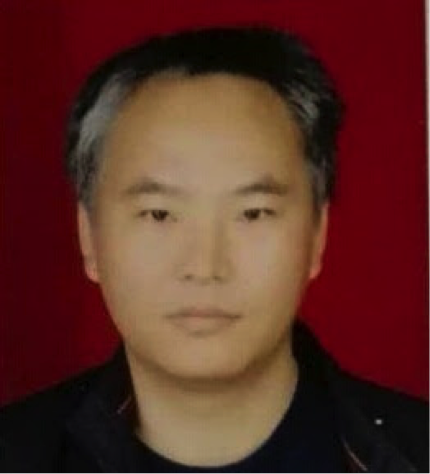
Haitao Zhang
© The Network of Chinese Human Rights Defenders (CHRD)
Medical and legal assistance
1971
Man
Rural
Born in Henan Province on March 10, 1971, Zhang moved to Xinjiang in 1995 after losing his job at a state-owned enterprise. Following his return to Henan in 2009, he was detained by police on suspicion of fraud and sent back to Xinjiang. He was released nearly two months later and subsequently began petitioning for redress over what he described as his wrongful detention. Through these efforts, he became connected to China’s rights defense movement.
Zhang frequently posted online commentary critical of government policies and current events and also gave interviews to overseas media outlets. For a brief period, he contributed articles to the website of a China-based human rights group. In its verdict, the court cited these activities as evidence of “providing intelligence overseas.”
On June 26, 2015, Urumqi police detained activist Zhang Haitao (张海涛) and placed him under criminal detention the following day on suspicion of “inciting ethnic hatred” based on comments he had posted online criticizing government policies. Police searched his home, seized a computer and USB drive, and froze his bank account.
At the time, Zhang’s wife, Li Aijie, was several months pregnant. She was compelled to surrender her mobile phone and sign a copy of the criminal detention notice, although she was not permitted to keep a copy. Police then took her to Zhongyanan Street Police Station, where they photographed her, collected her DNA sample and fingerprints, and interrogated her about her relationship with Zhang. Authorities later formally arrested Zhang on a different charge: “picking quarrels and provoking troubles.” In December 2015, the charges were changed again when prosecutors indicted him for “inciting subversion of state power” and “providing intelligence overseas,” offenses for which he was ultimately convicted.
Zhang’s lawyer was permitted to visit him in early August 2015 after his formal arrest. During the meeting, Zhang maintained his innocence and rejected the allegation that he had “incited ethnic hatred,” asserting instead that he had defended the interests of ethnic minorities.
The Urumqi Intermediate People’s Court tried Zhang on January 11, 2016, and convicted and sentenced him four days later. He received 15 years’ imprisonment for “inciting subversion of state power” and 5 years for “providing intelligence overseas.” Because the court ordered the sentences to be served consecutively but applied a reduction, Zhang received a total sentence of 19 years rather than 20. In addition, he was deprived of political rights for five years following his release and fined 120,000 RMB (approximately USD 18,500).
Following his conviction, Zhang filed an appeal in February 2016. The Xinjiang Higher People’s Court was expected to hear the appeal by April 19, 2016. However, the court approved a three-month extension and granted a further three-month delay on July 18, 2016, pushing the hearing to October. The appeal was not heard in October, and in November 2016 Zhang’s lawyers received notice that the appeal would be conducted in writing. A hearing was eventually held on November 28, 2016, lasting approximately 30 minutes, after which the court upheld the original judgment.
In prison (sentenced)
Jun 26, 2015
19 years in prison
Latitude: 41.3008533
Longitude: 82.8465834
Xinijiang
Shayar county prison
During a meeting with his appeals lawyer on November 14, 2016, Zhang alleged that he had been tortured by Urumqi national security officers during the 20 days following his detention on June 26, 2015. He alleged that he was deprived of sleep and continuously interrogated for 20 days; if he fell asleep, officers would burn a lighter near his head. He also alleged that he was deprived of food and water and beaten, including being hung from the ceiling and punched and kicked all over his body.
Zhang’s lawyer visited him at the Xinjiang Uyghur Autonomous Region Detention Center on July 7, 2016. During the visit, Zhang alleged that he had been tortured and mistreated in the detention center. He told his lawyer that he had been forced to wear heavy leg shackles continuously for six months, beginning in January 2016 after the ruling was handed down in the first-instance trial. He also stated that he received less food than other inmates, had been required to sleep directly next to other inmates since the first-instance trial, and was not allowed outside.
On July 11, 2016, Zhang’s wife, Li Aijie (李爱杰), spoke with an appellate court judge regarding the allegations of torture and mistreatment. The judge did not commit to any changes. However, on July 19, 2016, the Xinjiang Higher Procuratorate informed Li that it had ordered the removal of the “punishment equipment” from Zhang following her complaint.
However, Zhang continued to be forced to wear shackles. Zhang’s lawyer met with him again in the detention center on November 14, 2016, and confirmed that officials had never ordered the shackles to be removed. Furthermore, Zhang stated that he continued to be mistreated. Detention center guards allegedly forced him to sit in a specific position and would sound a horn if he moved.
Zhang said that his personal photos, letters, and defense papers had been confiscated during a safety inspection and that he was not allowed to have a pen or paper for personal use. He was required to write reports about his daily activities, such as eating, for the guards, and another inmate was still forced to sleep directly next to him at night.
Zhang also told his lawyer that, since August–September 2016, he had suffered severe stomach pains approximately every ten days, with each episode lasting several hours. He underwent several medical tests in late September, including a CT scan, ECG, ultrasound, and urine and blood tests, but he was never informed of the results. According to Zhang, detention center officials told him that the pain was because “he ate too much” and that if he reported being in pain, they would make him exercise.
Zhang said that he had been allowed outside a few times since his lawyer’s previous visit, although he was no longer permitted outside at all because it was considered “too cold.” He also told his lawyer that he was subjected to a strip search before each lawyer’s visit and was required to wear a black hood over his head while being escorted to the meeting room.
Zhang’s lawyer spoke with detention center officials and a local prosecutor on November 17, 2016. They stated that Zhang was required to wear shackles because detention center rules mandated their use in cases involving “endangering state security.” The following day, Zhang’s wife, Li Aijie, spoke with the same prosecutor, who claimed that Zhang was required to wear shackles for violating “supervision rules” but could not specify which rules he had allegedly broken. The prosecutor also refused to provide Li with a copy of Zhang’s medical reports related to the tests conducted in response to his stomach pain.
On December 2, 2016, after his appeal was rejected, authorities transferred Zhang Haitao to Shaya Prison to serve his sentence. He was denied family visits for several months. Prison authorities told his wife that this was because he was undergoing a three-month period of “education” and would have to pass an examination before being allowed to meet with family members.
His wife, Li Aijie (李爱杰), was able to visit him twice in prison, on April 24 and July 27, 2017. The April 2017 visit was the first family visit since his detention began in 2015. The meeting lasted 30 minutes and took place behind glass. Prior to the visit, guards informed Li that she was not permitted to discuss politics with Zhang and was not allowed to give him the Bible she had brought for him.
During the visit, Zhang told her that conditions in the prison were acceptable. He reported that he had undergone a medical examination before entering the prison, which came back clear. He described the daily routine as beginning at 7:30 a.m., followed by exercise, breakfast, another ten minutes of exercise, and study sessions focused on traditional Chinese texts, including the works of Confucius and Mencius.
Following the July 2017 prison visit, Li reported that Zhang told her he had been held in solitary confinement, was not allowed outdoors, and could receive fresh air and sunlight only through a small window in his cell.
The last visit approved by authorities for either family members or lawyers took place on April 26, 2018, when Zhang met with his sister. Following the visit, she reported that Zhang remained in solitary confinement and was still not permitted to go outside for fresh air or sunlight.
In October 2019, Zhang’s family reported that they had been denied visitation rights for the previous 18 months, since the April 2018 visit.
Joint communication, UN special procedures, AL CHN 4/2021 https://spcommreports.ohchr.org/TMResultsBase/DownLoadPublicCommunicationFile?gId=26337
Joint communication, UN special procedures, AL CHN 5/2025 https://spcommreports.ohchr.org/TMResultsBase/DownLoadPublicCommunicationFile?gId=29740
Opinion adopted by Working Group on Arbitrary Detention No 66/2021 concerning Zhang Haito, A/HRC/WGAD/2021/66, https://www.ohchr.org/sites/default/files/2022-03/A-HRC-WGAD-2021-66-China-AEV.pdf
Documented by