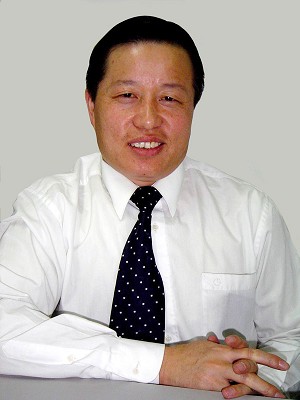
human rights defender
Zhisheng Gao
© Wikipedia
Legal and medical assistance
1964
Man
Rural
Gao Zhisheng (born 20 April 1964) is a Chinese human rights lawyer and dissident known for defending activists, religious minorities, and other victims of injustice while documenting human rights abuses in China. His dedication to defending vulnerable individuals has been deeply influenced by his Christian faith and its emphasis on morality and compassion.
Gao disappeared in February 2009 and was held in unofficial detention until December 2011, when Chinese authorities announced that he had been sentenced to three years in prison. His memoir, A China More Just (2007), chronicles his struggle as a human rights lawyer in the world’s largest communist state. In early 2012, Gao’s brother reported receiving a court document indicating that Gao was being held in Shayar Prison in Xinjiang. In 2014, Gao was reportedly released from prison but remained under strict house arrest.
In August 2017, Gao disappeared again during an apparent attempt to escape house arrest. After being recaptured in September, he was taken back into custody, and his whereabouts have remained unknown. As of January 2025, Gao is still considered disappeared.
Gao was born in Shaanxi Province and grew up with six siblings. His father died at the age of 40 when Gao was 11 years old. Because his family could not afford elementary school, he often sat outside classroom windows to listen to lessons. An uncle later helped him attend junior high school, after which he qualified to join the People’s Liberation Army (PLA).
Stationed at a military base in Kashgar, Xinjiang, Gao became a member of the Chinese Communist Party (CCP). After leaving the PLA, he worked as a food vendor. In 1991, inspired by a newspaper article discussing Deng Xiaoping’s initiative to train 150,000 new lawyers and strengthen China’s legal system, Gao began studying law. He later credited his exceptional memory for legal titles and clauses with helping him pass the bar examination in 1995.
After establishing his legal career, Gao founded the Beijing-based Zhisheng Law Firm and moved to Beijing in 2000. In 2001, China’s Ministry of Justice recognized him as one of the country’s ten best lawyers for his work representing victims of medical malpractice and advocating fair compensation for dispossessed landowners.
Over the following years, Gao represented a broad range of clients who had suffered injustice, becoming one of China’s most prominent human rights lawyers.
In prison (pre-trial)
Aug 13, 2017
Latitude: 35.86166
Longitude: 104.195397
Unknown
Unknown
Gao Zhisheng has been disbarred, detained multiple times by the Chinese government, and subjected to severe torture. He disappeared in February 2009 and remained in unofficial detention until December 2011, when authorities announced that he had been sentenced to three years’ imprisonment.
Gao’s memoir, A China More Just (2007), chronicles his struggle as a human rights lawyer in the world’s largest communist state. In subsequent writings, he accused the ruling Chinese Communist Party (CCP) of state-sponsored torture and described his own experiences of torture at the hands of the Chinese secret police.
On 17 January 2006, Amnesty International reported that Gao had narrowly escaped an alleged assassination attempt disguised as a traffic accident and purportedly orchestrated by Chinese security agents. Following numerous death threats and continued harassment, Gao disappeared on 15 August 2006 while visiting his sister’s family. He was officially arrested on 21 September 2006. On 22 December 2006, Gao was convicted of “subversion” and sentenced to three years in prison, suspended for five years of probation. The sentence also deprived him of certain political rights, including the freedom to publish or publicly criticize the government, for one year. During the proceedings, he publicly confessed to a number of alleged offenses. Following his release, however, Gao retracted his confession and stated that it had been obtained under torture during his 54 days in detention. He further claimed that his captors threatened to kill him if he publicly disclosed his treatment.
In Chapter 6 of his memoir, Gao condemned the CCP for employing what he described as “the most savage, most immoral, and most illegal means” to torture family members of dissidents. He formally renounced his membership in the CCP, describing the decision as “the proudest day of my life.”
On 22 September 2007, after sending open letters to Edward McMillan-Scott, then Vice-President of the European Parliament, and later to members of the United States Congress calling for a boycott of the 2008 Beijing Olympics, Gao was once again taken from his home by Chinese security agents. At the time, he had been under house arrest. In a subsequent letter, Gao alleged that he endured ten days of torture involving severe beatings, electric baton shocks, and the insertion of toothpicks into his genitalia, followed by weeks of psychological abuse. According to Gao, his interrogators told him that his case had become a personal matter for senior officials within the state security apparatus because he had repeatedly publicized previous instances of mistreatment. He further stated that he was fed only a small piece of bread and a portion of cabbage each day. Although he was eventually released in poor health, he reported being denied access to medical treatment.
On 13 August 2017, Gao escaped from house arrest and remained at large for approximately three weeks before being recaptured by Chinese authorities the following month. He subsequently remained incommunicado for at least a year. Since his disappearance in August 2017, no verified information regarding his whereabouts has been made publicly available.
In February 2009, Gao was taken away for interrogation by Chinese security agents and was not seen again until he resurfaced in Shanxi in March 2010. In January 2010, Gao’s brother, Gao Zhiyi, told an interviewer that Beijing police had informed him that Gao had “lost his way and gone missing” on 25 September 2009. On 28 March 2010, Gao was found living near Wutai Mountain. Speaking to a reporter by telephone, he stated that he was not in a position to be interviewed but confirmed that he had been sentenced and subsequently released.
In April 2010, Gao’s family reported that they had not heard from him since he returned from a visit to Xinjiang ten days earlier. Gao had left Beijing between 9 and 12 April to visit his in-laws in Ürümqi, carrying only a backpack. After months of speculation regarding his status and whereabouts, Xinhua reported in December 2011 that Gao had been sentenced to three years in prison by the No. 1 Beijing Intermediate People’s Court for having “seriously violated probation rules on a number of occasions,” leading the court to revoke his probation. According to his brother, Gao was being held in a prison in Xayar County, Xinjiang.
Gao was released from prison on 7 August 2014 and was subsequently placed under house arrest. On 13 August 2017, he escaped from house arrest and remained on the run for approximately three weeks before being recaptured by Chinese authorities the following month. He then remained incommunicado for at least a year.
Missing for more than seven years, Gao is currently believed to be subjected to enforced disappearance. No information regarding his whereabouts has been made public since he was taken into custody on 13 August 2017. As of January 2025, his family has neither heard from him nor received any information concerning his location.
Joint communication, UN special procedures, AL CHN 4/2021 https://spcommreports.ohchr.org/TMResultsBase/DownLoadPublicCommunicationFile?gId=26337
Joint communication, UN special procedures, AL CHN 5/2025 https://spcommreports.ohchr.org/TMResultsBase/DownLoadPublicCommunicationFile?gId=29740
Opinion adopted by the working Group on Arbitrary Detention No. 26/2010 concerning Zhisheng Gao, A/HRC/WGAD/2010/26 https://www.nchrd.org/wp-content/uploads/2011/10/Gao-Zhisheng_en-Nov-2010.pdf
Documented by